Picture


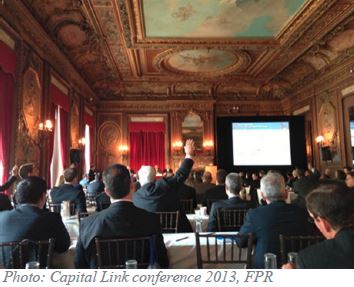
Jim Wiandt is the founder and CEO of IndexUniverse: In this interview, Rob Ivanoff caught up with Jim Wiandt during the Inside ETFs 2013 conference in Hollywood FL. Mr. Wiandt is the head of a publishing organization which includes the Journal of Indexes, IndexUniverse.com, ETF Analytics, Inside ETF events, and some upcoming offerings. A writer, an adventurer at heart, and a publisher by trade, this well-spoken and witty man has great understanding of the exchange-traded funds (ETF) industry.

What are the main challenges facing the ETFs industry, at the Inside ETF conference in FL? 

What I heard come up a lot is what we have heard for years: education. There is still a gap between the knowledge of the end investor and the level of sophistication of some ETFs, and this can taint the vast majority of ETFs, that are very much what you see (and what you think you see) is what you get.  Again, from an investor perspective, it is a good problem, because there are more efficient ETFs in more places than ever before, and increased competition will continue to drive that.

In 2009, you wrote a blog post asking “Is active trading the real story behind the ETF boom?” What is the real story right now?

Well I think there is just a huge mix of many different kinds of investors in the ETF market.  There are large institutions using ETFs as placeholders, high frequency traders and hedge funds trading, tactically focused advisors and retail making bets on market segment, and investors of the most boring sort, focused on smart asset allocation, broad diversification and efficient access to markets.  At this point everyone -- from grandma to hot-rodding traders play a big role in the ETF market.

Jim, you travel between Europe and the U.S. and have a great grasp on advances in both markets. What is your advice for U.S. asset managers looking to expand their fund offerings abroad? What good strategies and market opportunities exist for them?

I think it is very very tough. There are so few examples of native-based US companies (especially in finance) who have done very well in Europe. There are two primary reasons for this. One is that distribution is so closed and so nationally focused in Europe.  There really is a lock, by and large, by national banks over their home countries, particularly for retail, but even at an institutional level.  The other issue is cultural and knowledge.  A US approach will not work in Europe. You need to understand local culture, regulatory regimes, distribution mechanisms, tax structures, etc. to have a chance to succeed. I do think there are still HUGE opportunities in Europe and that the European advisor and retail markets for ETF is nascent and will boom. 

What innovations and initiatives should we expect from Index Universe in the future? In addition to your conference business, you guys recently launched indexes. Do you see this as part of a future strategy?

We'll continue to build new products wherever we think we can do something very well and where there's a place both in the market and in our business model for it.  I think you'll continue to see the depth and quality of our analytics business in particular deepen. Indexes at this time primarily support our analytics platform as benchmarks.  

Jim, you started your own business. What is your advice to every advisor and asset manager starting in the business? 

First, know that you love what you do and respect the people you work with and work for.  Second - be ready to give EVERYTHING you have to your business, your passion, be ready to bleed into it, to scratch and claw your way to success.  Having your own business can be very tough, but it's enormously liberating and if you really are doing what you love, I strongly believe that most people can find a way to make it work with drive, heart and perseverance.  Having good friends and supportive family and finding a balance can all help as well.  I've been lucky to have been in a great industry with lots of quality people and to have surrounded myself with extremely talented people who really do love what they do. When it's fun for everyone, that's when you know you're doing something right.

What is your outlook on active ETFs versus passive? 

The jury has been out on active ETFs for many years. Right now they are hardly a blip in overall ETF assets. It does appear that because of the relentless flow of assets from traditional mutual funds into ETFs, that more big traditional active managers are looking seriously at the ETF market.  There are reasons they've been reluctant to really embrace it, most importantly a fear of cannibalization to lower fees and disintermediation of their investors to the secondary market. But I do really think it's an instance - and the history of capitalism is littered with them where you either join in or get left behind.

Jim, you featured Brian Cashman from the Yankees as one of your main speakers; how can we apply his lessons to the ETF industry? 

Well, put your nose down, work hard and strive to be the very best in everything you do.  If you couple that with skills and surround yourself with good people, you should do OK. Of course the Yankees have done more than just OK in Cashman's tenure. I liked his understated manner and his focus really just on competence.

How do you expect the advisory business to change -- in the next 10 years?

Well, one big trend we're seeing for sure is the rise of so called Third Party Managers (TPMs) who build baskets of ETFs. Some of these managers are very very good - institutional caliber investors focused on exposures and risks. And others are the cowboys who charge too much and have a gamblers mentality.  But they'll continue to grow. More and more advisors and retail investors will be looking at the market in terms of exposures instead of who the best active managers are and what the best stock picks are. That is the major trend that ETFs have driven that is a sea change in investing mentality.

Your Inside ETFs events have grown into one of the most prestigious industry gatherings. How can fund firms materialize their goal of reaching advisors at this event? 

Well above all, of course, spend time with the advisors, and take the time to understand their needs and their businesses. The best issuers, like the best businesses in general really listen to the market and build to meet it.

In summary, Jim, what would you like to tell the readers of the ETF Business Review today?

 I love where our business is at and I could not be any happier working in the ETF industry - which is dynamic, every changing, always interesting, and as I said full of individuals who genuinely are focused on quality and investor interest. It's been great to be a part of a movement that has greatly benefited investors.  And we'll continue to push to see more investors better invested in better products. If we do that, we're doing our job and our business, and the ETF business will continue to grow for many years to come.

Rob is the editor of the ETF Business Review, intelligence for asset managers.


To read the case please click below. In the latest ETF Business Review, FPR took position in favor of iShares, as we believe many of the studies cited in the document below come from questionable sources. Further, share lending has made US markets more liquid and competitive; further share lending is helping ETF firms provide innovation in the indexing space and lower costs to record-low single digits. Eventual regulations can come up with a clear number that is required for share lending; however, the enforcing of this will be impossible and too costly.
laborers_local_265_v_ishares.pdf
File Size: 196 kb
File Type: pdf
Download File


For those of you subscribers of the ETFBR, the news are great. As Rob Ivanoff predicted back in May, JP Morgan has just  received a green light, to launch the  first physical copper ETF in the world. Expect iShares to also get a green light, as they have filed for a similar ETF - but theirs will hold twice the size requested by JP Morgan (still, Mr. Dimon shoots faster than Larry Fink these days). J.P. Morgan’s copper trust is looking to register 6.19 million shares, or 61,800 metric tons, of copper. The trust will hold “grade A” copper in physical form, and hold no copper futures. The copper will be stored in LME -approved warehouses in the Netherlands, Singapore, South Korea, China and the U.S. 

Over the past two years, the ETF Business Review published opinions in which we analyzed the pros and cons of all parties on both sides. In one of the opinions we concluded: "The market will embrace a physical-based copper ETF when it arrives. In fact, there will be a room for a number of them, similarly to gold. It is possible that the high cost of storing copper will hurt the fund in the short term, but we must assume that the cost will come down with assets going up. Expect competition in this space to increase from future-based  metal ETNs and ETFs, specifically similar ETPs based abroad, which will cut their pricing in order to compete." 

To read SEC notice of approval for JP Morgan click here. Below is the conclusion from our report summary, from May 2012. 


The big news are out: SEC will allow derivatives in active ETFs. This is a revolutionary development and it will serve as a catalyst behind the most amazing transformation of the fund business. (to read SEC's speech click here)

What does this mean for the fund industry? 
  • It means that the 30+ open-minded fund companies which have filed for active ETFs, are now free to launch active ETFs (AETFs) that can closely resemble their original strategies with derivatives, and transition managers into this new distribution wrapper/channel. Possibly, fund firms can elect to partner with a firm like AdvisorShares, which is interested in hiring sub-advisors.
  • It means that traditional fund companies, whom we begged to stay open-minded in terms of AETFs, will NOW have to invest in new distribution technology, ETFs know-how, and be part of economics that will revolutionize how fund products are bought, used, and managed.
  • For subscribers of the ETF Business Review, these news are nothing new. For the past two years, we at the leading authority in the fund industry, have been prepping for this moment, advising clients to consider active ETFs as yet another distribution channel for their existing strategies. We highlighted three key success factors: ability to deliver alpha, marketing scale, and human-based talent development (over indistinguishable shelf-products).
  • Last, consult your attorneys. The race is on, and this is a historical decision.
 
Atlas has un-shrugged. To join the ETF Business Review and sign here or contact me at rob.ivanoff@financialproductsresearch.com


Celebrating our 150th issue with a leading article "Austerity farm or a highway to print: what will you tell investors?" Thank you to all our readers on 3 continents! 
 
 
ETF firms continue to utilize Twitter, although growth is slowing down. Our subscribers last month benefited from the latest analysis on this important  topic, which we have maintained since the early days of Twitter. And while only 30% of the ETF industry is utilizing Twitter, that number is 62% for Fortune 500 companies. Subscribe for our ETF Business Review weekly to learn more and get our great ideas for using Twitter more effectively.


ProShares filed for active ETFs with SEC. The filing queries a broad permission for AETFs in stocks, bonds and currencies. In particular, the firm has detailed ProShares Emerging Market Debt ETF. Competition: WisdomTree has an emerging market debt AETF already on the market. The ELD has been one of the hottest entrants - but as of late, it has failed to pull new assets. It peaked at $1.1 billion late last year and it is expected to sit out 2012 flat, in lieu of collapsing Asian-growth story. Then, there are the passive EM debt ETFs. Despite all, ProShares is targeting a clever corner of the market. Packed with mystery, aka diversification possibilities -- EM debt is not frequented by bronco U.S. managers. Past studies have also shown, second-movers commonly match the net sales of first-entry offshoots. But roadblocks remain. Notably, late timing, until further details are disclosed. To read this filing please click here.  (Rob Ivanoff)